
Built on your reality
Yarken starts by learning your environment as it actually exists.
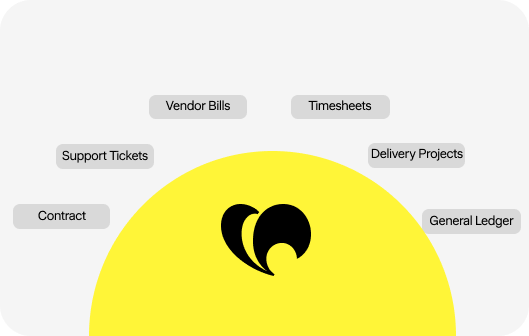
We connect to your cloud platforms, SaaS tools, infrastructure, financial systems, and
operational sources, then normalise and reconcile the data into a single, trusted model.
This creates one consistent foundation where TBM and FinOps operate on the same
source of truth, eliminating reconciliation, metric drift, and competing narratives.
From complexity to insights and recommendations
Once the foundation is in place, Yarken continuously analyses cost, usage, and demand across your technology estate.
Ask questions in natural language and receive finance-grade output:
- Cost drivers and unit costs
- Allocation impacts
- Forecast shifts
- Optimization opportunities
These are not generic alerts or surface-level anomalies. Each insight is grounded in business context and explained in terms decision-makers understand.
The system does the work
Insight alone doesn’t change outcomes. Execution does.
Yarken operationalises approved decisions by automating the workflows that slow teams down:
- Allocations and reallocations
- Governance guardrails
- Close preparation
- Variance root-cause identification
- Stakeholder reporting
Execution follows governed patterns, ensuring control, auditability, and repeatability—without adding operational friction.
Always explainable. Always governed.
Yarken is designed so AI never becomes a black box.
Every answer, insight, and action is traceable to its source data, underlying logic, and governing model. Finance can trust the output. IT can act on it. And organisations can scale decision-making without losing control.
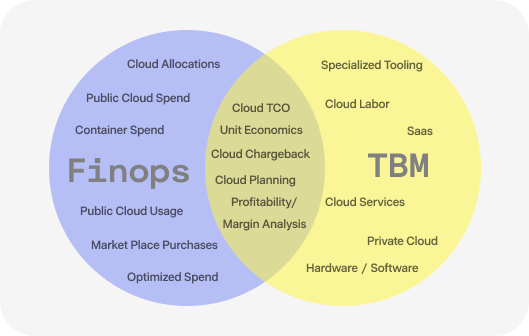
Aligned to FinOps and TBM
Yarken supports modern FinOps and TBM operating models by combining shared data, explainable insights, and governed execution, without forcing teams into rigid frameworks.
The Result
-
Every dollar becomes visible.
-
Every investment becomes accountable.
-
And IT spend management moves from reporting cycles to a living system, ready for what’s next.
Intelligence. Integration. Governance.
Agentic AI
Yarken’s agentic AI doesn’t just surface insights, it interprets signals, explains drivers, and recommends next best actions, all within a governed framework.
Integrations
Yarken connects seamlessly to the systems you already rely on, from cloud providers and SaaS platforms to financial and operational tools, so learning your environment is fast and continuous.
Security & governance
Enterprise-grade security, access controls, and auditability are built in by design, ensuring trust, compliance, and control at scale.
Each module builds on the same learned, governed system.
Select a module to explore how Yarken helps teams move from insight to action.
Planning
IT budgeting often lives in disconnected spreadsheets, making it slow to update, hard to trust, and difficult to align with how the business actually operates.
Yarken replaces this with a collaborative planning environment aligned to TBM taxonomy. Plans, forecasts, and actuals stay connected in real time, so assumptions are clear and changes don’t require rework.
The result is faster planning cycles, higher confidence in the numbers, and budgets that clearly link IT spend to business strategy.
IT Cost Intelligence
When financial data isn’t aligned to IT structures, even basic questions about spend become hard to answer.
Yarken translates GLs, budgets, and forecasts into business-aligned cost views using a standard TBM taxonomy. Finance and IT work from the same model, seeing costs by service, application, and capability.
This creates a shared financial language teams can trust—and use to drive better decisions.
Application & Service TCO
The true cost of applications and services is often obscured by hidden infrastructure, labor, and shared costs.
Yarken brings these elements together, tracking full lifecycle costs and tying them to usage and value. Teams can see what applications really cost to run—and what they deliver in return.
This enables rationalization, pricing, and investment decisions grounded in total cost and ROI.
Showback / Chargeback
Without visibility into consumption, business units struggle to understand their impact on IT spend.
Yarken allocates costs based on how services are actually used and communicates them clearly to stakeholders. Models are transparent, explainable, and adaptable as maturity evolves.
This drives accountability, encourages better behaviour, and supports both showback and chargeback approaches.
Cloud+
Cloud provider bills tell only part of the story, leaving out labor, tooling, support, and shared services.
Yarken extends cloud cost visibility beyond invoices, applying a standardized TCO model that captures the full cost of running cloud platforms.
Teams gain a complete, normalized view of cloud spend—supporting strategic decisions, cost control, and true ROI assessment.
SaaS+
SaaS spend is often fragmented across teams, with licenses underused and contracts disconnected from actual usage.
Yarken consolidates license, contract, and usage data into a single view, including indirect costs like identity and support services.
This reveals waste, supports right-sizing, and connects subscription cost to business value.
On-Prem+
On-prem infrastructure costs are typically buried in financial systems and disconnected from operational data.
Yarken captures labor, depreciation, maintenance, and shared services to calculate full on-prem TCO and map it to business services.
This creates parity with cloud models and enables consistent comparison across hybrid environments.
Contract Value Management
Contracts often exist as static documents, disconnected from how services are actually consumed.
Yarken turns contract data into a structured, living asset—linking terms, commitments, and entitlements to real usage.
This helps teams reduce overspend, improve renewals, and identify savings opportunities proactively.
Benchmarking
Without context, it’s hard to know whether IT costs or efficiency levels are good, bad, or average.
Yarken compares spend, unit costs, and service performance against peer benchmarks and best practices.
This provides the context needed to set realistic targets, prioritize optimization, and track value over time.
Be Prepared for whats next.
Business Unit Consumption
Precise business unit metrics allow showback and chargeback of cost to the service consumers
Cloud
Cost
Efficiently normalize and manage spend across multiple cloud providers
On-Prem Infrastructure
Supplement cloud costs with On-Prem infrastructure costs to get a holistic view
Unit Economics
Ensure and demonstrate the effectiveness of your services with precise unit metrics