Multi-Entity support now available in Yarken
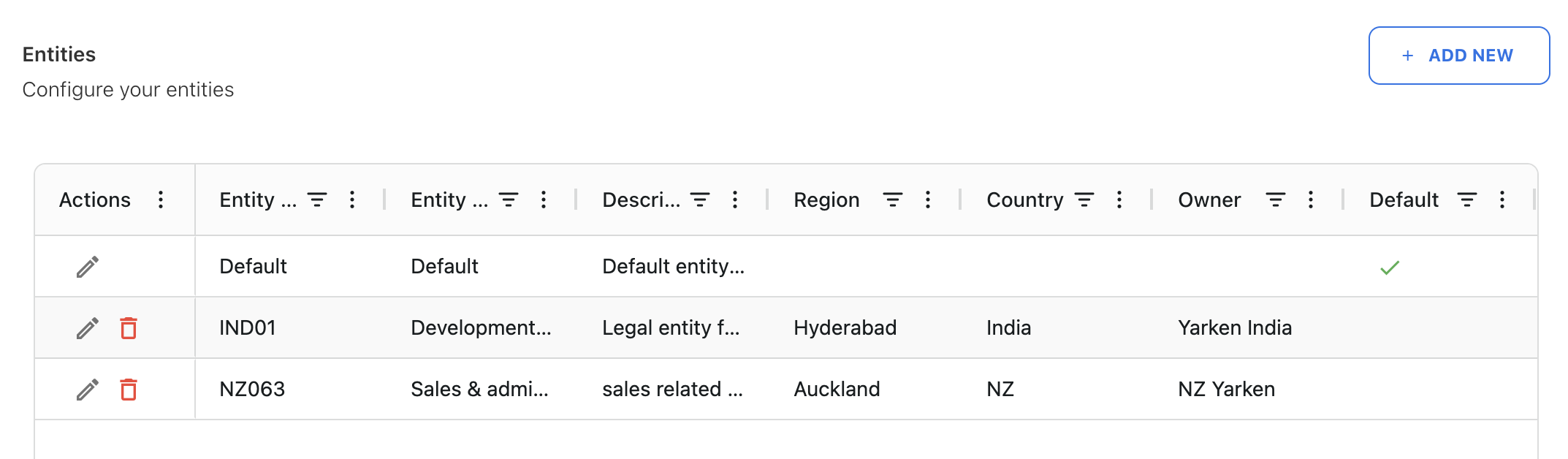
Yarken supports multi-entity structures, allowing organizations to manage and report spend across regions, business units, or legal entities within a single environment.
Key capabilities include:
- • Built-in default entity Every environment includes a Default entity, ensuring existing data, users, and configurations map to a baseline entity for uninterrupted reporting.
- • Flexible entity configuration Administrators configure entities in Settings, including required fields like Entity Code and Entity Name, plus optional metadata such as region, country, owner, and description.
- • Entity-based access control Permissions are managed at the entity level. Administrators access all entities, while non-admin users are assigned to specific entities via User Management, ensuring controlled visibility of financial and cloud data.
- • Entity attribution across spend and cloud data Spend and cloud records include an Entity field. If none is provided, records default to the environment’s Default entity. Cloud uploads can assign or override entities via upload rules.
- • Entity-aware reporting and analytics A new Entity filter is available across analytics and dashboards, allowing users to analyze spend by one or multiple entities. Filters maintain consistent sorting and clear labeling when multiple entities are selected.
These enhancements simplify structuring financial data by organizational boundaries, improving governance, reporting clarity, and operational visibility across global teams.
New asset allocation method: Split by Spend
Yarken now introduces a Split by Spend allocation option for manual asset rules, enabling asset costs to be distributed proportionally based on actual spend patterns.
Key highlights:- • Spend-based allocation: Asset costs are allocated proportionally based on underlying spend across selected assets.
- • Flexible rule configuration: Users can select By Spend as a split type when defining manual asset allocation rules.
- • Targeted allocation control: Filters such as Cost Pool, Sub Cost Pool, Tower, and Sub Tower can be applied to control which spend contributes to the allocation.
- • Immediate updates: Changes to allocation rules take effect instantly.
Conversion-only currency option added
Yarken now allows foreign currencies to be configured as conversion-only, giving administrators greater control over how currencies are used within the platform. This helps organizations maintain accurate currency conversions for cloud data, budgets, and forecasts while limiting reporting to only the currencies relevant to their financial analysis.
- • Flexible currency configuration: Administrators can now configure whether a currency is available for reporting or restricted to conversion-only use.
- • Conversion-only support for financial data: Currencies set as conversion-only can still be used to convert cloud spend, budgets, and forecasts without appearing in reporting views.
- • Reporting control through toggle settings: The toggle is enabled by default to allow reporting; disabling it restricts the currency to conversion purposes only.
Planning exchange rates added for budgets & forecast
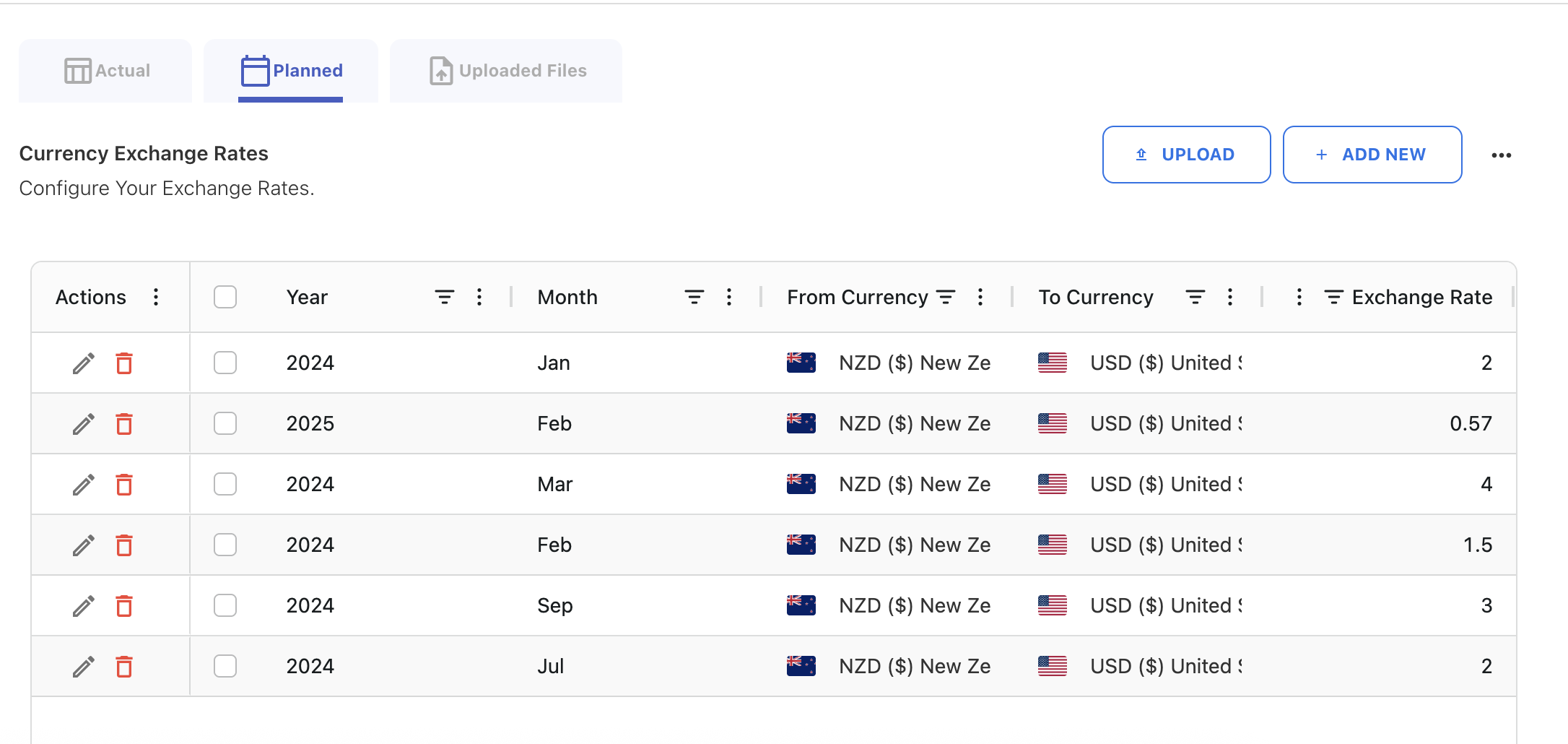
Yarken now supports separate planning exchange rates for budgets and forecasts, allowing organizations to use dedicated rates for financial planning while keeping them independent from actual exchange rates used in reporting.
- • Dedicated planning exchange rate table A separate exchange rate table is available specifically for planning (budget) purposes, independent of actual exchange rates.
- • Monthly planning rates support Planning exchange rates can be defined monthly for all selected foreign currencies to support more accurate budget planning.
Ask Yarken enhancements for currency and spend detail
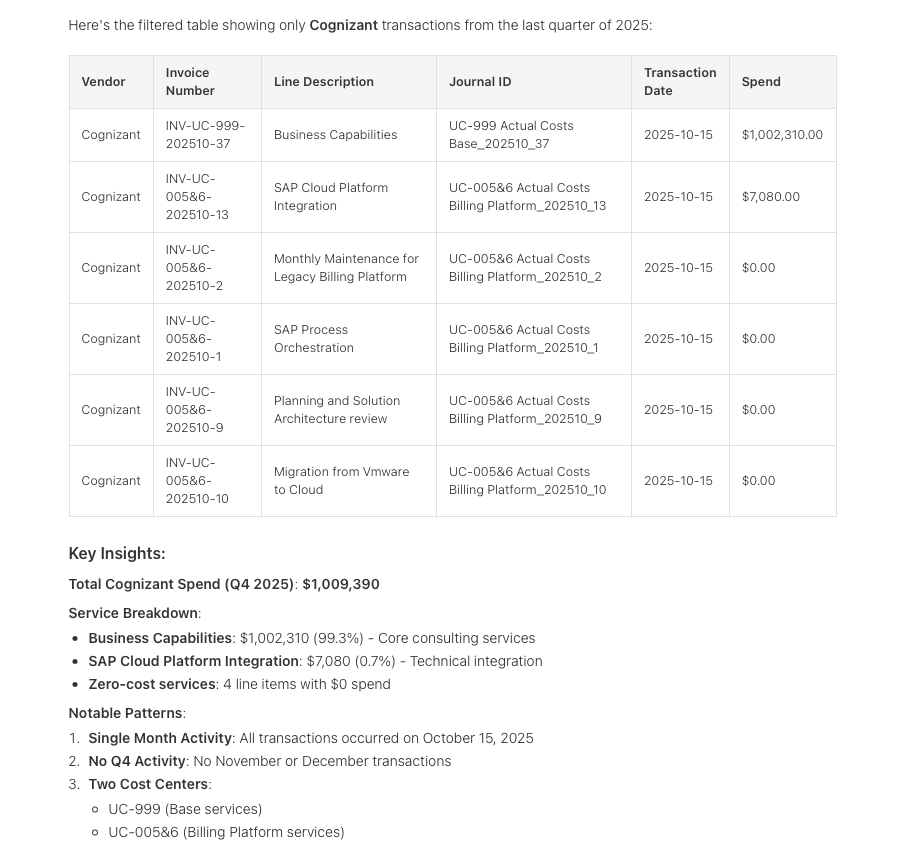
Ask Yarken has been enhanced to provide better visibility into spend data by supporting preferred reporting currencies and deeper journal-level spend exploration. These improvements help users analyze financial data more accurately and drill down into detailed transaction-level insights directly within Ask Yarken.
- • Preferred currency support Ask Yarken now displays spend in the user’s selected reporting currency, automatically converting values from the base currency when needed.
- • Journal-level spend line access Users can now drill down into spend using newly exposed journal-level dimensions, including Journal ID, Journal Date, Transaction Date, Line Description, Project ID, and Invoice Number.