
FinOps is expanding. The harder question is whether it's connecting.
The latest State of FinOps data shows a practice in structural transition. Its growing and changing shape. What that means for how organizations manage technology cost is worth thinking through carefully.
The scope is widening. That part was predictable. FinOps started in cloud. That's where the signal was strongest and consumption was visible, spend was variable, and the case for optimization was easy to make. You isolate the cost, align it to usage, build trust in the numbers. The model works.
What the 2026 data confirms is that the scope has expanded significantly. Teams are now actively managing SaaS, licensing, private cloud, and AI spend alongside cloud. The footprint has grown because the technology landscape has grown.
But the more interesting shift isn't where FinOps is going. It's why. Most organizations aren't managing cloud cost in isolation anymore. They're managing products, platforms, and services: each one made up of cloud, SaaS, vendors, labor, and shared infrastructure, all contributing to the same outcome. When FinOps expands into new areas, it's not stretching. It's catching up to how technology is actually consumed.
More visibility doesn't always mean more clarity. Teams can see consumption more clearly than they could before. They can track usage, act faster, and build accountability closer to where spend is generated. That's real progress.
But as scope expands, so does fragmentation. Different views of cost. Different datasets. Decisions happening in parallel, often without a shared frame of reference. Most organizations don't lack cost data. They lack a system that makes cost usable. Most decisions are still made locally. The impact shows up globally. And that gap, between isolated optimization and connected decision-making, is where a lot of value is getting lost.
The pattern repeats, but only gets you so far. What we see consistently in practice is this: FinOps expands scope by repeating the same motion. Define the boundary, align cost to consumption, drive accountability. It works in cloud. It works in SaaS. It works in licensing. But as the model grows, cost structures matter as much as cost metrics. Because each new scope adds context. Eventually the harder questions show up.
- How do these pieces come together?
- How do you move from isolated views to a real understanding of total cost — including shared services, platform overhead, and unit economics?
- Do your product leaders see the same cost view as finance, or a completely different one?
That last question is worth sitting with. Because the answer, in most organizations, is still: a completely different one. Where leading organizations are shifting focus. The direction of travel in the 2026 data is consistent. FinOps is moving closer to architecture decisions, product strategy, and the CIO and CFO agenda. The practice is maturing from a cost optimization function into something closer to a decision-making infrastructure.
That shift brings new pressure. As visibility increases, so does the need for consistency, alignment, and a shared language across finance and technology. Autonomy at the team level still matters, but without a connecting layer, autonomy fragments the view. The question changes. It's no longer just how to optimize cloud. It becomes how to understand the full cost of what you deliver and how to act on it in real time. From tracking cost to connecting it. From optimization to decision-making. From visibility to alignment. That's the real direction of travel.
What this means for leaders right now. This isn't just a FinOps maturity question anymore. It's a design question. How do you connect consumption to business value? How do you maintain speed without losing control? How do you give teams autonomy without fragmenting the view at the top? The State of FinOps shows where things are heading: broader scope, more responsibility, closer to the business. Coverage has expanded. The gap now is connection. The value isn't in the data. It's in what you do with it, across every dollar, across the whole estate.
See the cost. Connect it. Capture the value.
From something changed to here's why: in minutes.
Cost analysis has always been slow by design. Data from multiple systems, reconciliation, root cause work, a report. By the time the answer arrives, the decision has usually already been made. Agentic AI changes that dynamic in a way that's worth understanding.
The question that takes too long to answer.
A small unit cost increase (less than a cent) showed up in Yarken's platform. At scale, across millions of units, that fraction adds up fast. The immediate question was straightforward: is this a pricing issue, a usage issue, or something else? That question, in most organizations, triggers a familiar sequence. Pull data from multiple systems. Validate and reconcile. Analyze usage against pricing. Identify the cost drivers. Build a report. The process takes hours, sometimes days. And by the time the answer lands, it's often incomplete. What's interesting isn't that this process is slow. It's that it's accepted as the default.
What happened instead.
With a single prompt, Yarken's agentic AI pulled and validated unit-level consumption data, isolated cost drivers across services and operations, quantified the split between usage and pricing impact, performed root cause analysis, and generated an executive-ready report. The 2.1% cost increase, $156.89 in total, was fully explained. 95% of it traced back to AWS Secrets Manager usage, driven by 12.8 million additional retrievals. 94% confirmed as usage-driven, not a pricing change. Clear optimization paths identified across logging, caching, and I/O.
The same analysis that would have taken a team the better part of a day was done in minutes. That's not a marginal improvement. It's a different way of working.
Why the speed matters less than the shift.
Faster reporting is useful. But that's not really what's changing here. The more significant shift is in where decisions get made and how quickly they can be grounded in evidence. When root cause analysis takes days, most teams operate on assumptions for longer than they should. When it takes minutes, the conversation moves directly to what to do next. There's also a quality difference. Agentic AI doesn't just surface numbers, it attributes them. Cost tied to real usage, at the unit level, connected to business context. Not infrastructure metrics in isolation, but spend explained in terms that product, finance, and engineering teams can all act on. Most organizations don't lack cost data. They lack the ability to move from data to decision without losing a day in between.
Where this is headed.
What this example points to is something broader than a single feature. When you bring together cloud cost data, usage and consumption metrics, and business context: unit economics, product structure, service ownership, and layer in agentic AI, the model shifts from periodic reporting to continuous, intelligent optimization. The dashboard doesn't go away. But it stops being the end point. It becomes the starting point for a system that keeps asking the next question automatically. That's the real direction of travel for TBM and FinOps. Not more visibility. A system that makes visibility usable: at the pace decisions actually need to happen. The value was never in seeing that costs changed. It's in understanding why and knowing what to do next.

What's New in Yarken
Five months of product highlights — one standout feature per release, November 2025 through March 2026.
Yarken introduced Financial Models, letting teams structure Spend, Budget, and Forecast data as reusable, comparable scenarios while keeping actuals cleanly separated from plans.
Organisations can now manage and report spend across regions, business units, or legal entities in a single environment — with entity-level access control and filtering throughout analytics.
The AI assistant was rebuilt from fixed workflows into a reasoning-driven engine that interprets intent, explains spend variances, generates charts, and supports internal SOPs and playbooks.
Ask Yarken is now available directly within GL transaction popups and all tabular dashboard views, so users can ask questions in context without switching screens.
Yarken added support for the latest TBM Council standard, introducing Cloud Services and AI Models classifications, a Sustainability & ESG category, and a hybrid mode to run v4.0 and v5.0.1 in parallel during migration.
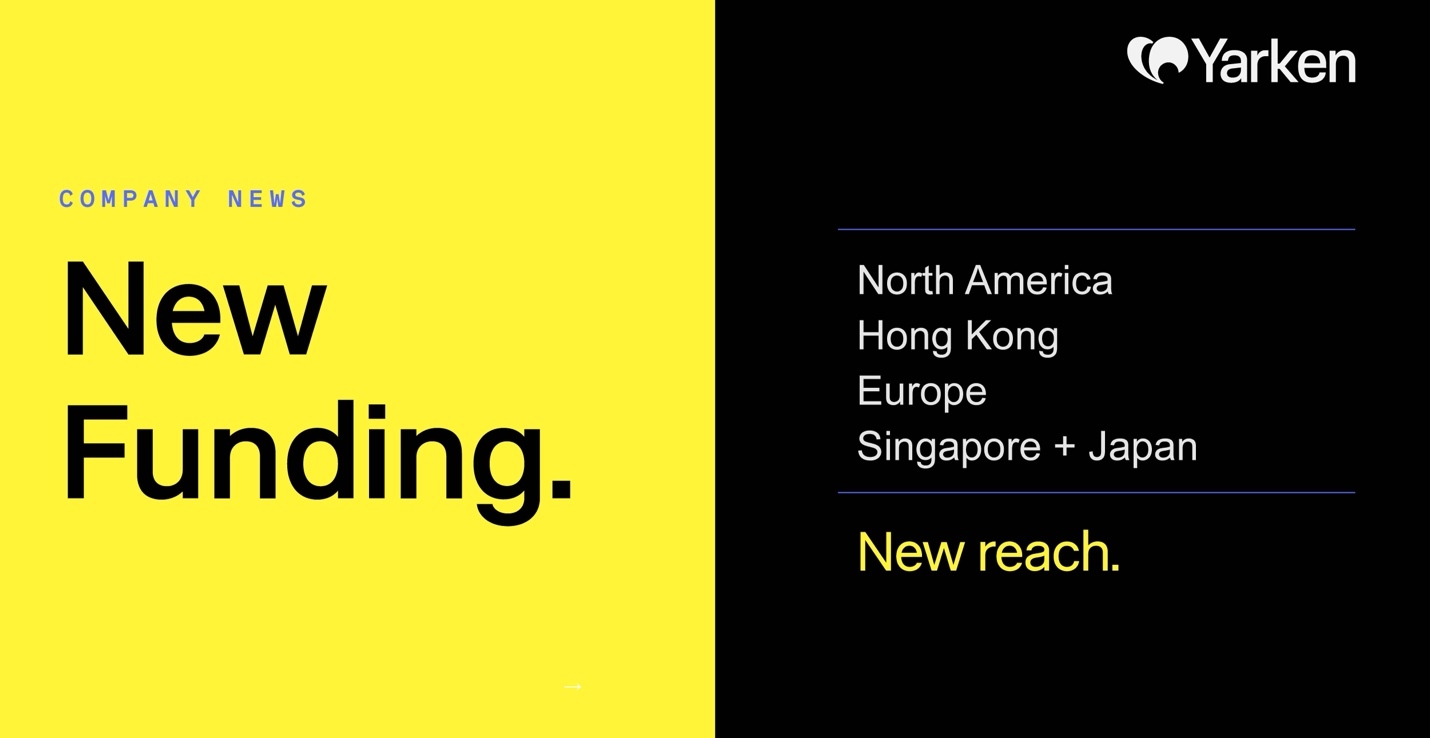
Yarken closes new funding. Here's what it's for.
We've closed a new funding round Betatron Venture Group, with participation from Tenity VC and additional strategic investors. This is a good moment to be clear about what we're building and where we're taking it.
Why this matters now.
The problem Yarken is built to solve is getting harder for most organizations, not easier. Cloud, SaaS, and AI adoption have shifted technology spend from predictable capital expenditure to variable, consumption-based operating cost. Traditional tools weren't designed for that model. Most enterprises are managing the gap with disconnected platforms, manual reconciliation, and reporting cycles that move too slowly for the decisions they're meant to inform. That's the gap we're closing. A single, AI-powered platform that brings TBM and FinOps together: full visibility across cloud, on-premise, SaaS, labor, and vendors, with agentic AI that moves from data to insight without the manual work in between. The goal has always been the same. Give technology leaders the clarity to make better decisions, across every dollar, across the whole estate.
What the funding enables.
The investment accelerates two things: product and reach. We're growing the team and expanding into the markets where the need is most acute.
The partner ecosystem.
We're building alongside Rego Consulting, Accenture, Kyndryl, and SoftwareOne. These partnerships aren't ancillary, they're how Yarken gets embedded into the digital transformation programs where the need is real and the scale is large.
Where we go from here.
The funding is validation, but it's not the point. What matters is what it makes possible: a faster product roadmap, deeper customer support, and the reach to work with organizations that are serious about getting technology finance right. The organizations we work with are dealing with real complexity. Costs that change daily, teams that don't share a common view of spend, governance frameworks that lag behind how technology is actually consumed. That's the problem. That's what we're here for.
More to come.
If you want to talk, reach out to us on our website or contact the team directly.